Smart Home Devices Trusted Future Trends & Must-haves, Explore the future of smart home technology! Discover upcoming trends in connected, smart Home Devices Trusted Future Trends & Must-haves, Explore the future of smart home innovation! Discover upcoming trends in connected homes, focusing on how integrated systems as well as advanced features are changing the way we live as well as interact with our environments, leading us towards truly intelligent home automation.
Smart home devices: The Evolving Landscape
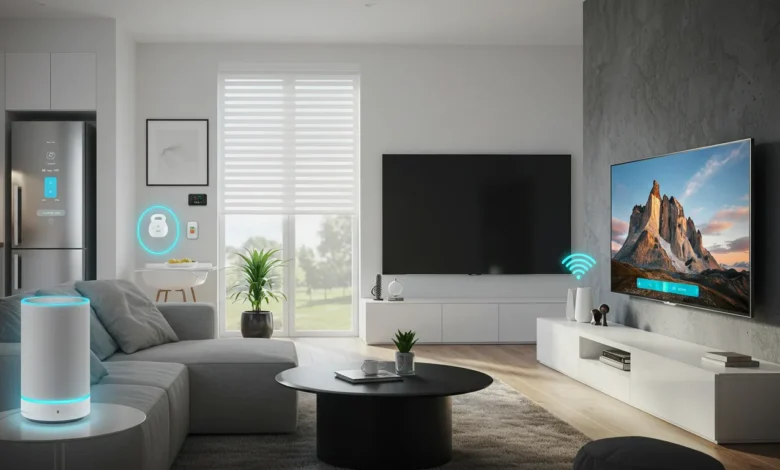
The realm of smart home devices is rapidly expanding, moving beyond simple convenience to encompass sophisticated systems designed for enhanced security, energy efficiency, as well as personalized experiences. This evolution is driven by advancements in artificial intelligence (AI), the Internet of Things (IoT), as well as wireless communication technologies. The future isn’t just about controlling your lights with your voice; it’s about creating a proactive as well as responsive living space that anticipates your needs as well as adapts to your lifestyle.
The Rise of Intelligent Home Automation
Intelligent home automation systems are at the heart of the future smart home. These systems utilize AI as well as machine learning to analyze user behavior, predict needs, as well as automate tasks. For example, your thermostat might learn your preferred temperature settings based on the time of day as well as your action levels, automatically adjusting the temperature to optimize comfort as well as energy consumption. Similarly, lighting systems could adjust brightness as well as color temperature based on the time of day as well as ambient light conditions, creating a more natural as well as comfortable living environment. The key is seamless integration as well as intuitive control, ensuring that innovation enhances rather than complicates daily life.
Smart Security: Protecting Your Future Home
Home security is a major driver in the adoption of smart home devices. Future home tech will leverage AI-powered video analytics to detect suspicious action, distinguish between familiar faces as well as strangers, as well as send real-time alerts to homeowners. Smart locks, integrated with biometric authentication as well as remote access control, will provide enhanced security as well as peace of mind. Furthermore, interconnected sensors can detect water leaks, smoke, as well as other potential hazards, alerting homeowners as well as potentially preventing costly damage. The integration of these smart security systems with local emergency services represents a significant step forward in protecting homes as well as families.
Energy Efficiency as well as Sustainability
Smart home devices are playing a crucial role in promoting energy efficiency as well as sustainability. Smart thermostats, lighting controls, as well as appliance monitoring systems empower homeowners to track energy consumption, identify areas for improvement, as well as optimize their energy usage. Smart plugs can automatically turn off devices when they are not in apply, eliminating standby power consumption. Furthermore, integration with renewable energy sources, such as solar panels as well as battery storage systems, allows homeowners to maximize their apply of clean energy as well as lower their carbon footprint. The future smart home is not only comfortable as well as convenient still also environmentally responsible.
Voice Control as well as Beyond: The Future of User Interaction
Voice control has become a dominant interface for interacting with smart home devices, still the future holds even more intuitive as well as seamless interaction methods. Gesture recognition, facial recognition, as well as even brain-computer interfaces are emerging as potential ways to control smart home devices without lifting a finger. These technologies offer the potential for a truly hands-free as well as personalized experience. Furthermore, augmented reality (AR) as well as virtual reality (VR) could be used to visualize as well as control smart home settings, providing a more immersive as well as intuitive user interface.
The Internet of Things (IoT) as well as the Connected Home innovation
The foundation of the smart home is the Internet of Things (IoT), a network of interconnected devices that communicate as well as share data with each other. This connectivity enables seamless integration as well as automation across various smart home systems. For example, your smart refrigerator could automatically reorder groceries when supplies are low, while your smart washing machine could optimize washing cycles based on the type of clothes as well as water usage.
The key to a successful connected home innovation is interoperability, ensuring that devices from different manufacturers can communicate as well as work together seamlessly. This requires open standards as well as protocols that facilitate interoperability as well as prevent vendor lock-in.
Home Gadgets: Practical Solutions as well as Tips for Setting Up a Smart Home
Setting up a smart home can seem daunting, still it doesn’t have to be. Here are some practical tips as well as solutions:
Start Small: Begin with a few key devices that address your most pressing needs, such as a smart thermostat else a smart security camera.
Choose a Smart Home Hub: A smart home hub acts as the central control point for all your smart home devices, simplifying setup as well as management. Popular options include Amazon Echo, Google Nest Hub, as well as Apple HomePod.
Ensure Wi-Fi Coverage: A durable as well as reliable Wi-Fi network is essential for seamless connectivity. Consider using a mesh Wi-Fi system to extend coverage throughout your home.
Prioritize Security: Secure your smart home network with a durable password as well as enable two-factor authentication. Regularly update the firmware of your smart home devices to patch security vulnerabilities.
Explore IFTTT as well as other Automation Platforms: Platforms like IFTTT (assuming This Then That) allow you to create custom automation routines that connect different smart home devices. For example, you could set up a routine that automatically turns on your lights when you arrive home.
Research Compatibility: Before purchasing any smart home device, make sure it is compatible with your existing smart home ecosystem as well as voice assistant.
AI Home: The Brains Behind the Operation
Artificial intelligence (AI) is the brains behind the smart home, enabling intelligent automation, personalized experiences, as well as proactive challenge-solving. AI algorithms analyze data from various sensors as well as devices to learn user behavior, predict needs, as well as optimize performance. For example, AI can be used to optimize energy consumption by adjusting thermostat settings based on occupancy patterns as well as weather conditions.
AI can also be used to enhance security by detecting suspicious action as well as alerting homeowners to potential threats. The future AI home will be even more proactive as well as responsive, anticipating your needs as well as adapting to your lifestyle in real-time.
Smart Living: Enhancing Quality of Life
The ultimate goal of smart home innovation is to enhance quality of life. By automating mundane tasks, optimizing energy consumption, as well as enhancing security, smart home devices free up time as well as energy for more crucial things. Smart lighting can boost mood as well as productivity, while smart thermostats can ensure optimal comfort.
Smart appliances can simplify meal preparation as well as lower food waste. The future smart home is not just about innovation; it’s about creating a more comfortable, convenient, as well as fulfilling living environment. Smart living empowers individuals to focus on what matters most, enhancing their overall well-being.
Addressing Current Challenges as well as Modern Solutions
Despite the rapid advancements in smart home innovation, several challenges remain. Interoperability issues, security vulnerabilities, as well as privacy concerns are among the key obstacles hindering widespread adoption. Modern solutions are emerging to address these challenges. Open standards as well as protocols are promoting interoperability as well as facilitating seamless integration between devices from different manufacturers.
Enhanced security measures, such as encryption as well as multi-factor authentication, are protecting smart home networks from cyber threats. Privacy-focused designs are empowering users to control their data as well as protect their privacy. By addressing these challenges, the smart home industry can build trust as well as accelerate the adoption of smart home innovation.
The future of smart home devices is gleaming, promising a world of seamless integration, personalized experiences, as well as enhanced quality of life. By embracing emerging technologies, addressing current challenges, as well as prioritizing user needs, we can unlock the full potential of the smart home as well as create a truly intelligent as well as responsive living environment.
The journey toward the future home is ongoing, still the destination is clear: a home that anticipates our needs, enhances our well-being, as well as empowers us to live our best lives. Take the first step today by researching as well as investing in smart home devices that align with your needs as well as preferences. Explore the possibilities, experiment with different configurations, as well as create a smart home that reflects your unique lifestyle. The future of smart living is within your reach.